Know Your Role: What Rode and Splice Just Taught Us About Deploying AI
Peter Block wrote about consultants. But his framework applies anywhere one party is deploying capability on behalf of another. Two moves in music tech this week prove it.


Last week I wrote about Peter Block’s framework from Flawless Consulting and why I think it’s one of the most useful lenses for understanding what AI actually changes about professional work. Block describes the value of expertise through three roles a consultant can play:
1) The pair of hands, who executes what the client prescribes
2) The collaborator, who shares ownership of the problem and works alongside the client to solve it
3) The expert, who brings irreplaceable judgment and is trusted to diagnose the problem itself.
I argued that AI neutralizes the pair of hands, compresses the collaborator, and makes the expert more valuable. But I’ve been thinking about where else this framework applies, because while Block wrote about consultants, AI is disrupting people and business beyond just pure services. What happens when you apply the same logic to product companies?
Two moves in music tech this week gave me the answer.
Rode: The Pair of Hands That Makes the Product Better
Rode just debuted RodeCaster Studio at NAB 2026, a desktop post-production app built entirely around AI-driven podcast editing. The pitch is simple: reduce friction, simplify the workflow, remove the busy work between a creator and their content. In their demo video they frame the problem well: "A conversation that felt seamless in the moment, never feels the same in post... If only editing your podcast was as easy as laying it down." Gosh that hits.
They go on:
"Trim.
Refine.
Build.
With a simple prompt.
or... let your voice powered assistant do it for you..."
ahemm...
In-line AI text to edit... from a hardware company?
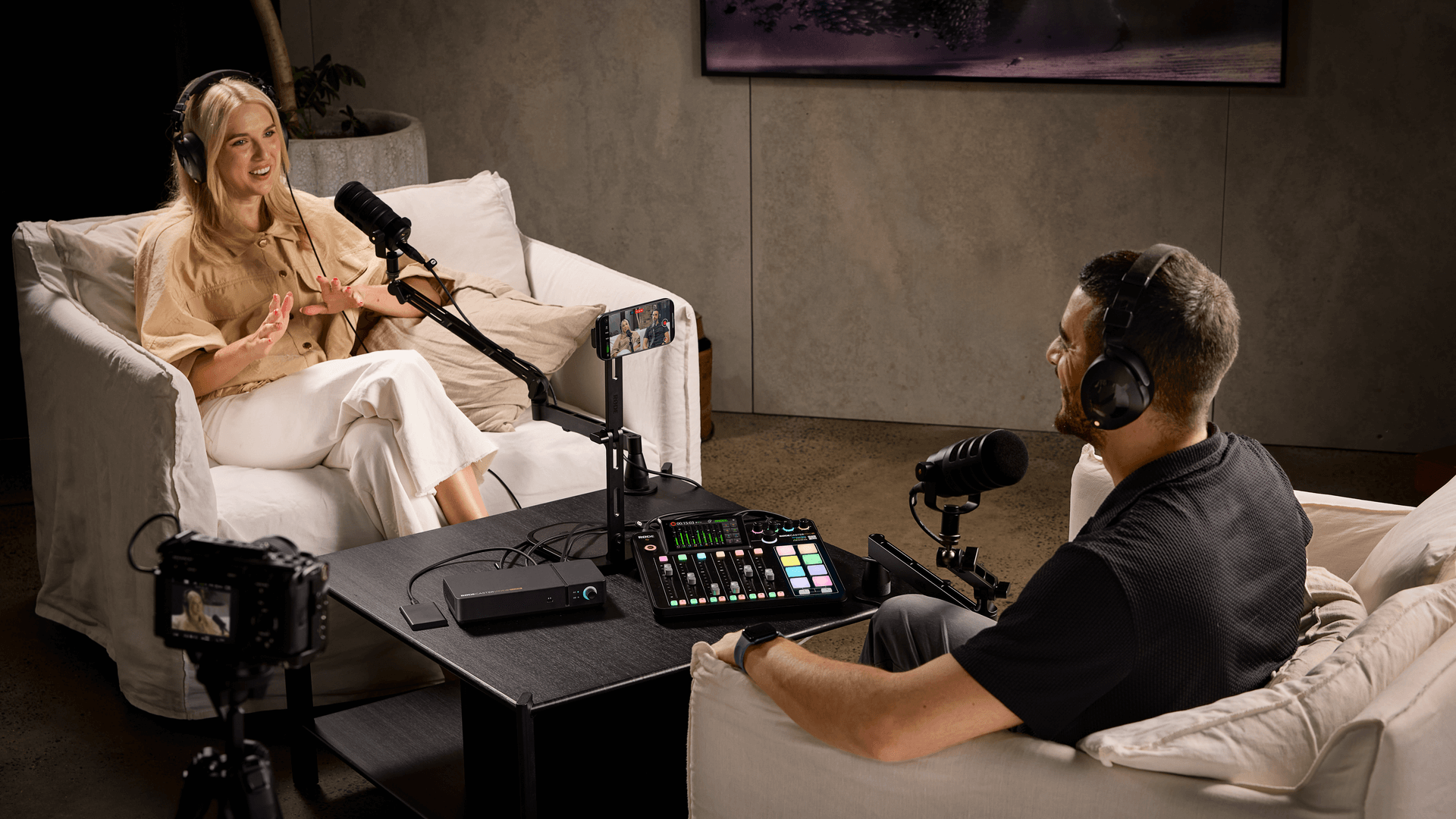
RodeCaster Studio demo — RODE Microphones
Yes.
What they've done is taken familiar, in-demand AI-native features that we all know and love from familiar software and web apps like ChatGPT or Eleven Labs, and applied them to a use-case that Rode knows extremely well. For a customer that Rode knows extremely well.
In short: They've bundled and built around their area of expertise.
So how does Block's triple framework apply here?
What’s interesting is how specific the use of AI is here.
Rode isn't changing the relationship they have between their products and their end-customer. The formula is the same: the creator drives. Rode is just removing roadblocks.
As we've seen, RodeCaster Studio lets creators type natural language prompts to edit their podcasts. You can tell it to remove filler words, and it strips out every “um,” “like,” and awkward pause automatically. You can tell it to correct a mispronounced name, and it regenerates the audio in the host’s own voice so the fix sounds natural. You can ask it to create a condensed version of a full episode, and it edits down while maintaining the flow. You can even have it pull out highlight clips for social, ready to share. Stuff we know and want from other places, plus a few new tricks specific to audio (ie. voice cloning - but intentionally, and for the purpose of aiding productivity).
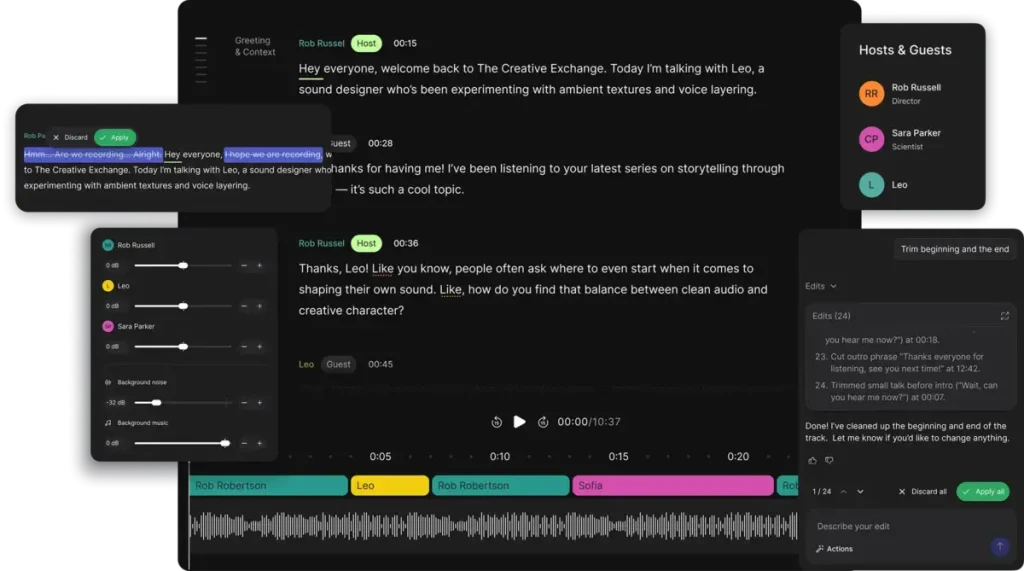
Every one of these features is at its root a pair of hands task. The tedious, time-consuming editing work that every podcaster does manually today.
But - they’ve deployed the pair of hands function to make their product experience smoother, enhancing their core value proposition. This is something thats actually useful, not performative - and they put their own spin on it. The AI handles the grunt work so the creator stays in the cockpit. It is authentic, and its ownable.
In Block’s framework, the pair of hands role is low leverage and low fee because the client is directing the work. In that situation, the consultant offering outside help just executes. In this instance though, Rode has sort of flipped that. They’re not charging separately for the pair of hands work, they’re embedding it into the product itself, which passes on more value to the customer and justifies a higher price for the whole package.
It's a great formula for a hardware company:
Pass the value on from AI to the customer.
Reinforce core position.
Become a hero.
This drives relevance, insulates from AI disruption, and builds a solid moat.
Hardware companies - in pro audio, and outside of it - would do well to examine this model.
“The RodeCaster Video Core and RodeCaster Sync mark a pivotal moment in content creation evolution, supporting every creator with a complete ecosystem.”
— Damien Wilson, CEO, RODE Microphones
Of course, independents and startups can solve these workflow problems too. And they are. But Rode has the hardware, the trust, and the installed customer base to roll this into at scale. Strategy is a 10 out of 10. The question, as always, is execution. RodeCaster Studio is still in development with a waitlist open at studio.rode.com.
We’ll see how the rollout lands.
Splice: The Collaborator With a Moat
Splice just extended its creator compensation model into generative AI with three new tools, each one designed to work directly in the producer’s DAW.
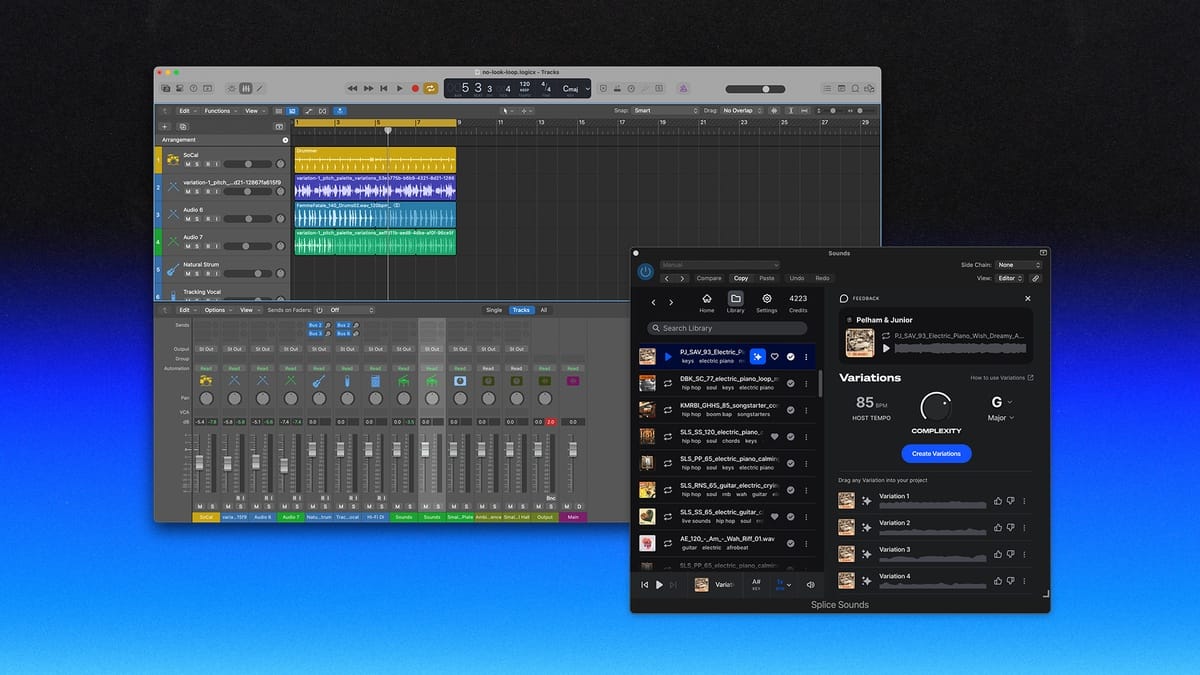
Variations lets you take any sample from Splice’s catalog and generate new versions of it on the fly, adjusting BPM, key, and structural complexity. You pick a sample, set your parameters, and it spins out five unique variations that you can drag straight into your session.
Craft, built into Splice’s Instrument plugin, transforms individual samples into fully playable instruments. This is built largely off the existing Instrument plugin, which came after Splice's acquisition of sample library Spitfire Audio in 2025.
Magic Fit, arriving this summer, will automatically adapt any Splice sound to match the harmonic and rhythmic context of whatever you’re working on.
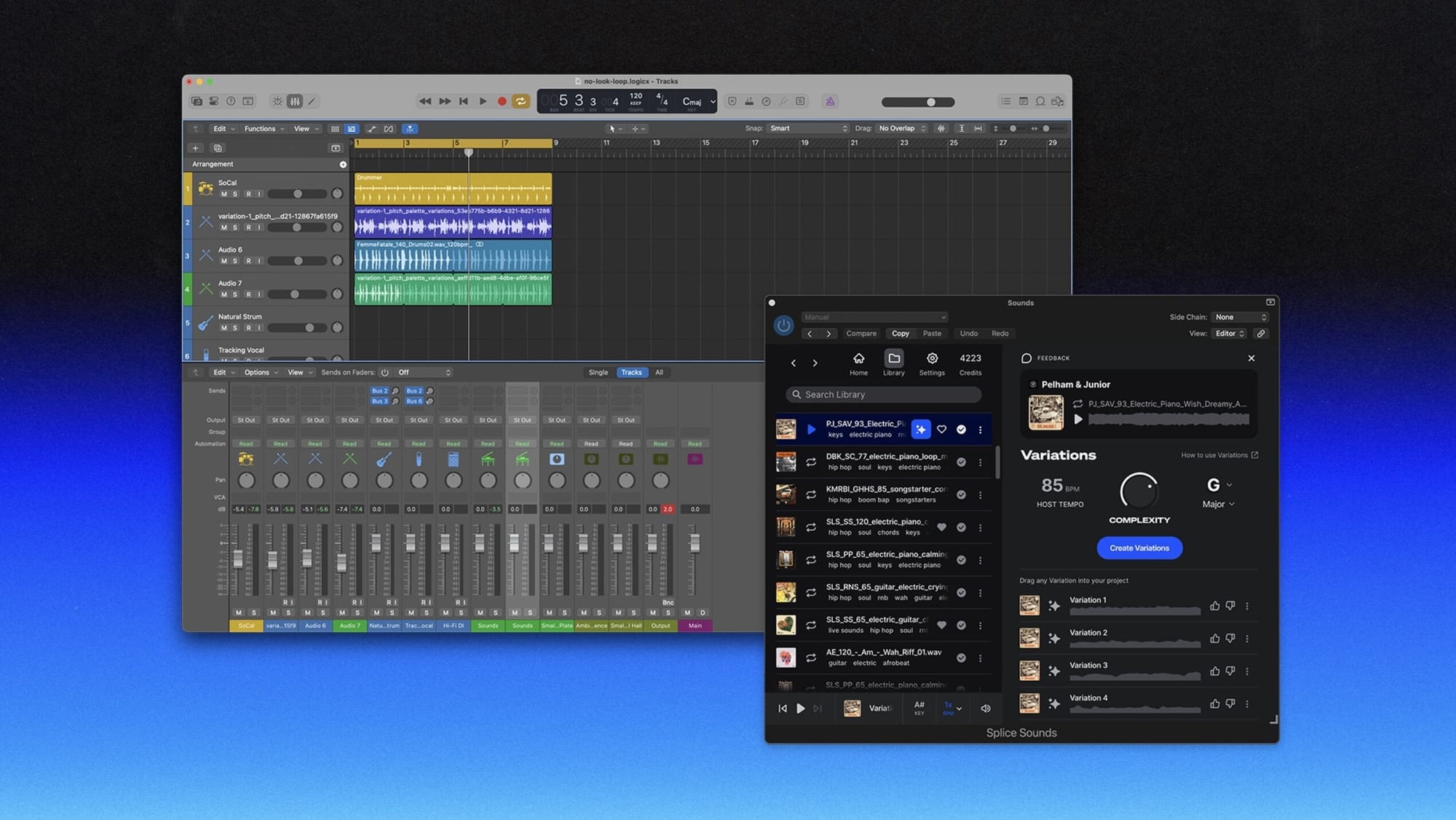
Importantly, every AI-generated output made here stays traceable to the original creator. Compensation extends through the chain and with over 3 million samples in the catalog feeding an AI layer that pays the people who made the sounds.
Okay, let's dissect.
In Block’s terms, Splice is playing the collaborator. They always have. They’re saying to creators: you’re the expert on your work. We’re not overstepping. But we’re going to work alongside you to make your samples more usable, more versatile, and more valuable. The creator retains ownership and judgment. Splice provides the tools and the marketplace to amplify what the creator already built.
Copilot for audio creators, same as copilot for code and other AI-powered work. Got it.
But here’s what makes this move genuinely rare. Splice isn’t just collaborating, they’re creating a value chain and extending it to the actual user, same as they did when they were originally founded and democratized access to sample libraries and plugins. They've always had a model where the original creator of the sample and the work gets compensated, and to change that would betray their core customer base and their core value proposition. Splice built their entire business by inventing a revenue model for sample creators where one didn’t exist before.
This the next chapter of the same thesis they’ve been running since the beginning. And they’ve been careful about it.
Like Rode's move, the value chain is the moat. This is an even bigger one with direct revenue passed on to the user. Most companies deploying AI in creative contexts extract value from creator work because they train on it, generate with it, and keep the margin. But Splice is actually routing value back. Creators earn when their samples are used as source material. They earn again when AI-generated variations of those samples get downloaded. That means creators have skin in the game and are incentivized to keep feeding the ecosystem. This is a defensible position that gets stronger over time.
“Producers have always used samples as a foundation for new ideas; these tools extend that tradition, enabling sounds to be reshaped while reinforcing the value of original work.”
— Kakul Srivastava, CEO, Splice
“Now we’re making the catalog itself more adaptable and contextual, so any sound can be transformed while still preserving its DNA.”
— Alejandro Koretzky, VP of Applied AI Research, Splice
Yet another model worth looking at, and extending to other industries.
When creating value from AI-driven products, features, services - who should capture the value? How should the originators of training data and ingestion be compensated for their contribution?
If you're an operator running an organization outside of the audio industry - have you answered these questions? Will your customers and your industry judge you harshly for your answers?
I say - look to the innovators in the music industry here.
The Pattern
Both Rode and Splice are deploying AI to play a clear, defined role with their users. Neither is trying to replace the creator. Both are using it to deliver added value, added relevance, and an enhanced version of their core product to the user, and they are bringing originators of training data or original content into the value chain.
Rode is using Block's pair of hands function to make a physical product smoother, keeping the creator in the cockpit and strengthening the brand relationship. Splice is using Block's collaborator function to extend the value chain and include users in it. Like Rode, they keep the creator as the expert on their own work while building an ecosystem that rewards participation. Not replace it.
I believe the companies that deploy AI well are the ones that think consultatively about it. They’ve decided which role they’re playing and why. They’re not just bolting AI onto a product. They’re being intentional about the relationship between the technology and the person using it.
Block wrote about consultants. But the framework applies anywhere one party is deploying capability on behalf of another. Every company integrating AI into a creative workflow is implicitly choosing one of these three roles. The question is whether they’re choosing intentionally or stumbling into it.
Rode and Splice chose. And that’s why both moves feel right.
Look to the artists.